Why Dominance Theory Is Wrong — and Harmful
The idea that dog owners must establish themselves as the "alpha" or "pack leader" — using physical intimidation, alpha rolls, and forceful corrections — became popular in the 1970s and 1980s, largely based on a 1970 study by wolf researcher L. David Mech. Mech observed captive wolves in an artificial group (unrelated wolves forced together) and noted hierarchical "dominant" behaviours. But Mech himself has spent decades since then publicly retracting this interpretation: in natural wolf packs, wolves live in family groups where "dominance" is simply parenthood, not conquest.
More critically, dogs are not wolves. The domestication process — spanning 15,000–40,000 years — has profoundly changed canine cognition and social behaviour. Dogs are uniquely adapted to read and respond to human social cues; they are not trying to dominate their owners or take over the household. A 2009 study published in the Journal of Veterinary Behavior by researchers at the University of Bristol found that confrontational training techniques — including alpha rolls, scruffing, staring down, and forced submission — significantly increased fear-based aggression in dogs. In short, dominance-based training does not work, and it makes dogs more dangerous.
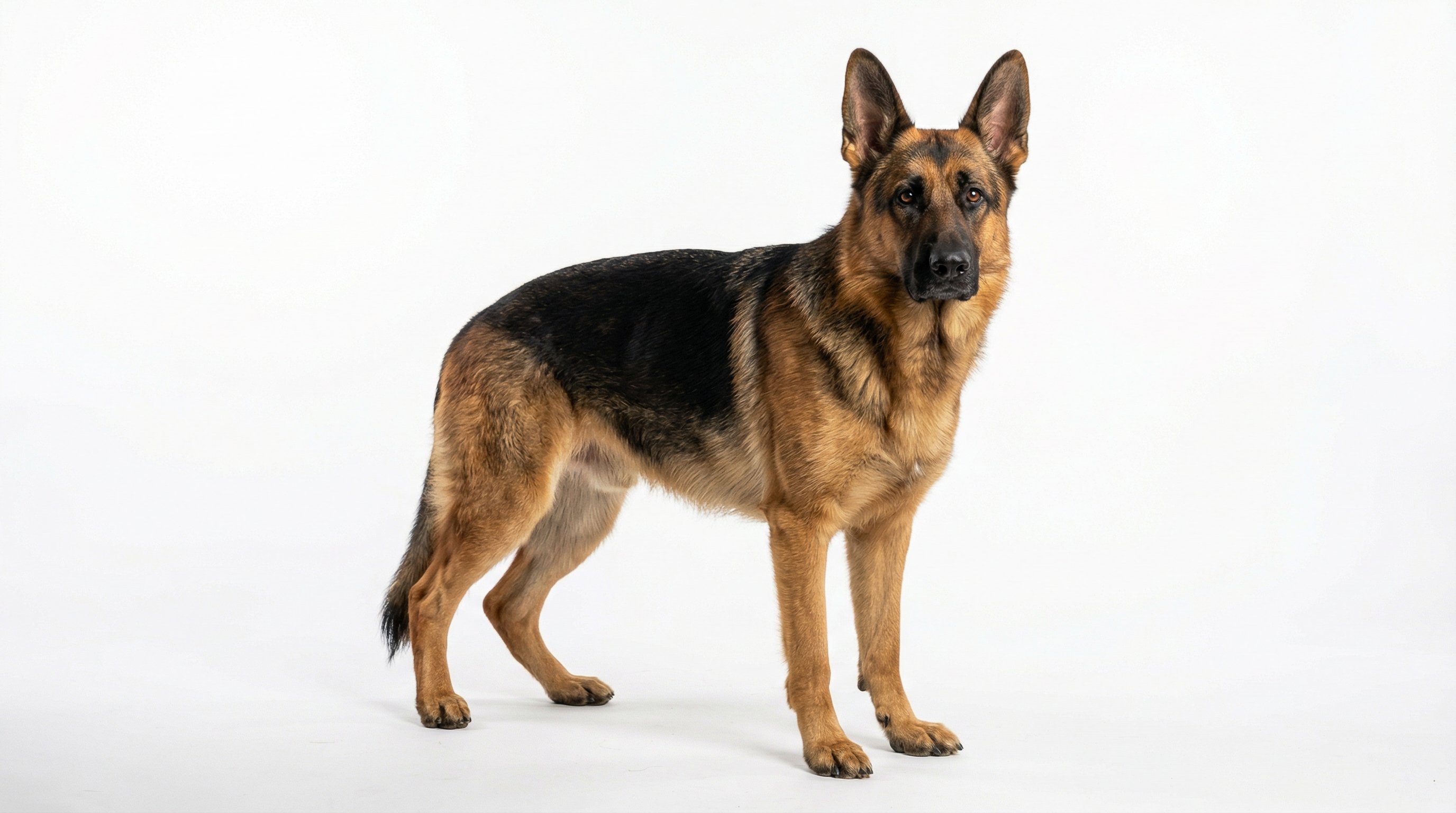
What Actually Motivates a German Shepherd
German Shepherds were bred as working dogs — herding, protection, police, and military work. They are task-oriented, highly intelligent (consistently ranked 3rd in Stanley Coren's canine intelligence scale), and have a strong work ethic. What motivates them is not fear of punishment, but the satisfaction of doing a job correctly and receiving meaningful reinforcement. They are extraordinarily sensitive to handler emotion and communication — a calm, clear, consistent owner produces a calm, reliable dog.
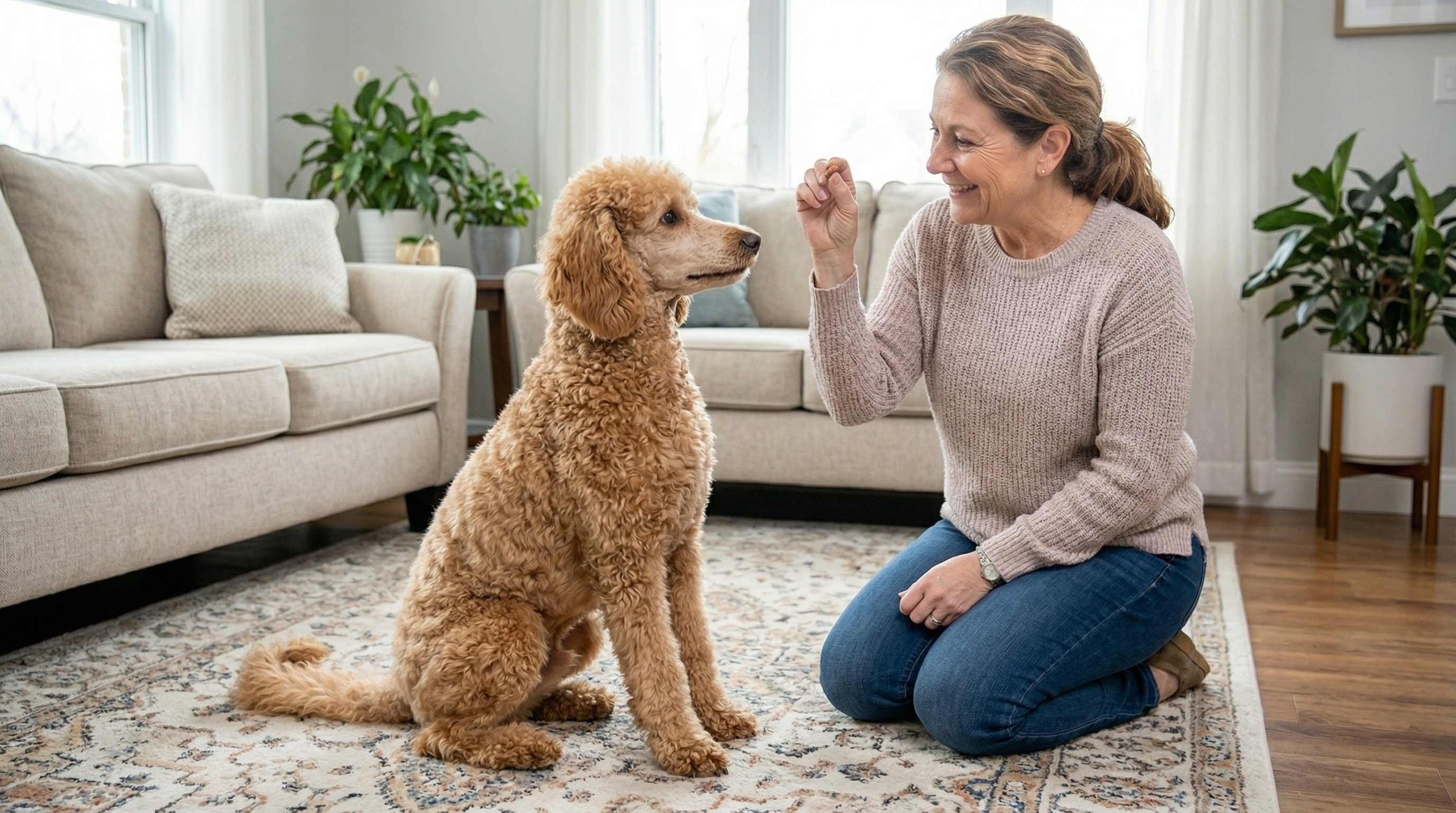
The currency of GSD training is simple: reward history. A behaviour that has been rewarded reliably will be offered again. A behaviour that has never produced a reward will eventually extinguish. Positive reinforcement — food treats, play, praise, or the opportunity to work — delivered within 1.5 seconds of the correct behaviour is the most powerful training tool available. The precision of timing matters more than the value of the reward in the moment of learning.
The Critical Socialisation Window
German Shepherds are one of the breeds most commonly described as "fear-aggressive" by rescue organisations — and the vast majority of these cases trace back to inadequate socialisation during the critical developmental window of 3–14 weeks of age. During this period, the puppy's brain is actively forming the neural pathways that will determine what is safe and what is threatening for the rest of its life. A GSD puppy exposed to diverse people, animals, environments, sounds, and handling during this window will develop into a confident adult. One deprived of this exposure will default to fear when encountering the unfamiliar — and a fearful 35 kg German Shepherd is a serious liability.
Socialisation should continue beyond 14 weeks throughout the first year. Puppy classes (after first vaccinations, typically 10–12 weeks) are excellent for structured exposure. Avoid dog parks with adult dogs for the first 6 months — the uncontrolled environment can create negative associations that are difficult to reverse. Instead, arrange structured meetings with known, vaccinated, well-mannered adult dogs.
✅ The 5 Core Commands — Training Timeline for GSDs
- Sit — Week 1 (8–10 weeks). The foundation. Easiest starting point, builds the concept of "behaviours earn rewards."
- Down — Week 2–3. Teaches impulse control and calm default behaviour at the owner's feet.
- Stay — Week 3–4. Builds duration and distance. Start with 3 seconds, add time gradually over weeks.
- Come (recall) — Week 2 onwards. The most critical safety command. Always reward a recall with high-value treats — never call the dog to punish it.
- Leave it — Week 4–5. Teaches the dog to disengage from food, objects, and other animals on cue. Life-saving in many situations.
Mental Stimulation: The Key to a Well-Behaved GSD
The single most common mistake German Shepherd owners make is providing sufficient physical exercise while neglecting mental stimulation. A GSD that runs 10 km a day but has no cognitive challenge will redirect its working drive into destructive behaviour — excavating the garden, dismantling furniture, or obsessive barking. These dogs were bred to make decisions, problem-solve, and work alongside humans for hours at a time. Pure exercise alone does not satisfy this need.
Effective mental enrichment for German Shepherds includes: nose work and scent detection games (GSDs have exceptional olfactory ability and find scent work deeply satisfying), structured obedience training sessions (10–15 minutes, 2–3 times daily), trick training (complex behaviours like object retrieval, discrimination tasks, and tidy-up), and if the owner has the interest, sport activities such as IPO/Schutzhund, agility, or rally obedience. Even 15 minutes of concentrated nose work will tire a GSD more thoroughly than a 45-minute run.
⚠️ Training Methods to Avoid With German Shepherds
- Prong collars and slip chains — cause tracheal damage and increase fear-based reactivity
- E-collars / shock collars — a 2021 meta-analysis found these increase stress behaviours and inter-dog aggression
- Alpha rolls (forced submission) — historically correlated with increased biting incidents
- Scruffing — causes fear and damages trust; ineffective for behaviour change
- Hitting, shouting, or physical punishment — produces learned helplessness and suppressed warning signals, increasing bite risk
Want the Complete German Shepherd Care Manual?
Full training programmes, socialisation checklists, health guides, feeding charts, and working dog enrichment activities — all in one PDF.
Browse All Manuals →