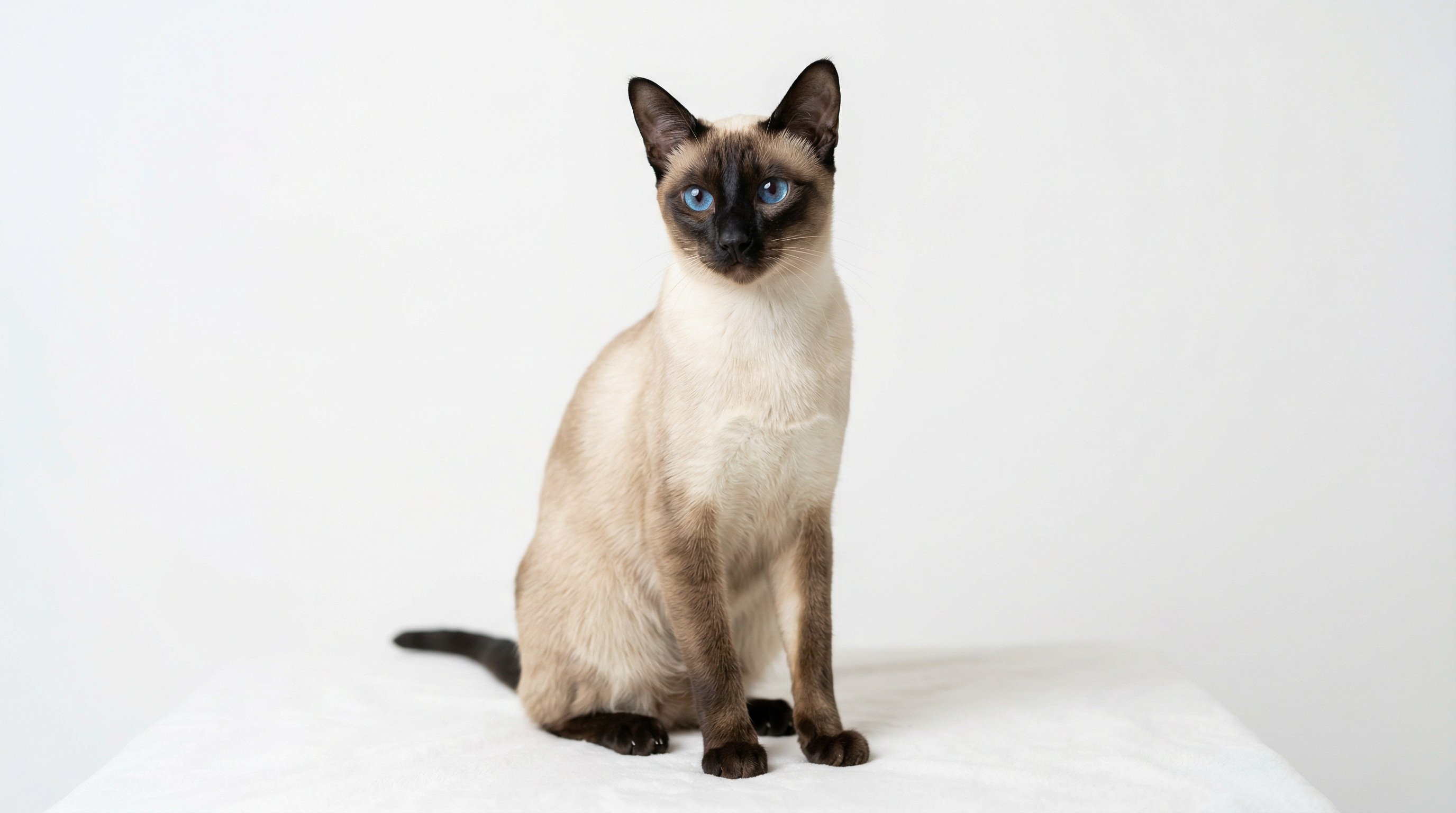
The Siamese Body: Built for Activity, Requiring Targeted Nutrition
The Siamese is one of the oldest naturally occurring cat breeds, with origins in Thailand (formerly Siam) traceable to at least the 14th century. Unlike many modern breeds developed through selective crossing, the Siamese developed naturally over centuries — and its physiology reflects a cat built for activity, agility, and a lean, muscular frame. The breed's long, tubular body, fine bone structure, and wedge-shaped head are matched by a metabolic rate that is noticeably higher than that of heavier, more sedentary breeds like Persians or British Shorthairs.
This faster metabolism means Siamese cats burn energy more quickly, have a higher lean muscle mass relative to body weight, and can lose condition rapidly if their diet is inadequate in protein or calories. Many Siamese owners worry that their cat looks "too thin" — and while the breed is naturally lean, a visible spine or prominent hip bones always warrant dietary assessment rather than acceptance as breed-normal. The goal is a cat where ribs are easily felt but not prominently visible, with a small abdominal tuck and no fat padding over the ribcage.
Protein Requirements: Higher Than the Average Cat
All cats are obligate carnivores — their digestive systems are optimised for metabolising animal protein and fat, not carbohydrates. Cats lack the enzymatic pathways to efficiently convert plant-based protein into usable amino acids, and they have a continuous metabolic need for protein that cannot be "turned off" the way a dog's can. The minimum protein requirement for adult cats per AAFCO guidelines is 26% on a dry matter basis, but this is a floor, not a target — most feline nutritionists recommend 35–45% protein for active adult cats.
For Siamese, given their active lifestyle and lean muscle maintenance requirements, aiming for the higher end of this range is appropriate. Look for foods where the first one or two ingredients are named animal proteins: chicken, turkey, tuna, salmon, duck, or rabbit. Avoid foods where the protein content is padded with plant-based proteins (corn gluten meal, soy protein isolate) — these score higher on the protein percentage label but provide a less bioavailable amino acid profile for cats. The critical amino acids to check are taurine (essential for heart and eye health — cats cannot synthesise it), arginine (essential for nitrogen detoxification), and methionine.
Taurine: The Non-Negotiable Nutrient
Taurine deficiency is a life-threatening problem in cats that develops slowly and silently. Unlike dogs and humans, cats cannot synthesise taurine from other amino acids in sufficient quantities — they must consume it directly from animal tissue. Taurine deficiency causes dilated cardiomyopathy (DCM — heart muscle weakening), central retinal degeneration leading to blindness, and reproductive failure. Every commercial cat food sold in developed markets must contain adequate taurine by regulatory requirement — but not all sources of taurine are equally bioavailable, and cooking processes reduce taurine content.
High-quality wet foods with named meat sources consistently deliver more bioavailable taurine than dry foods, which undergo high-heat processing that degrades the amino acid. For a Siamese fed primarily dry food, it is worth confirming that the food is AAFCO-compliant and choosing brands that third-party test their finished products for taurine levels rather than relying solely on ingredient calculation. Some raw diets can be taurine-adequate, but require careful formulation by a board-certified veterinary nutritionist to be complete and balanced.
✅ Ideal Siamese Diet at a Glance
- Primary diet: high-quality wet food (70–80% moisture) fed 2–3 times daily
- Protein: ≥ 35% on dry matter basis from named animal sources
- Taurine: confirmed in AAFCO-compliant food (all reputable brands)
- Caloric target: 250–300 kcal/day for an active 4–5 kg Siamese adult
- Avoid free-feeding dry food — measure every meal
- Fresh water always available; consider a cat water fountain
- Omega-3 supplement (fish oil) supports coat quality and reduces inflammation
Health Conditions That Affect Dietary Choices in Siamese
Siamese cats have a number of breed-specific health predispositions that owners should factor into dietary decisions. Amyloidosis — a condition in which abnormal protein deposits accumulate in organs, primarily the liver — is documented in the Siamese and related Oriental breeds. While there is no specific "amyloidosis diet," avoiding excessive dietary protein beyond what's needed, maintaining a healthy weight, and regular liver monitoring via annual blood panels is recommended from age 5 onwards.
Siamese are also prone to dental disease due to their narrow jaw structure, which crowds teeth and creates food-trapping surfaces. Dental diets or supplemental dental chews can help, but regular professional dental cleaning under anaesthesia remains the gold standard. Finally, upper respiratory disease — while not directly dietary — is common in Siamese; a well-nourished cat with a strong immune system recovers faster and is less susceptible to recurrence. Ensuring adequate Vitamin E, Vitamin C (cats synthesise their own, but synthesis may be insufficient under illness), and zinc through a high-quality diet supports immune resilience.
⚠️ Signs Your Siamese May Have Nutritional Deficiency
- Dull, rough, or thinning coat despite regular grooming
- Visible weight loss or muscle wasting over the hindquarters
- Reduced activity or less interest in play than usual
- Pale gums (possible anaemia — check protein and iron)
- Squinting, cloudiness, or decreased visual acuity (possible taurine deficiency)
- Irregular heartbeat or breathing difficulty (cardiac evaluation needed)
Want the Complete Siamese Cat Care Manual?
Full feeding charts, health screening guides, dental care schedules, enrichment plans, and breed-specific vet timelines — all in one PDF.
Browse All Manuals →